


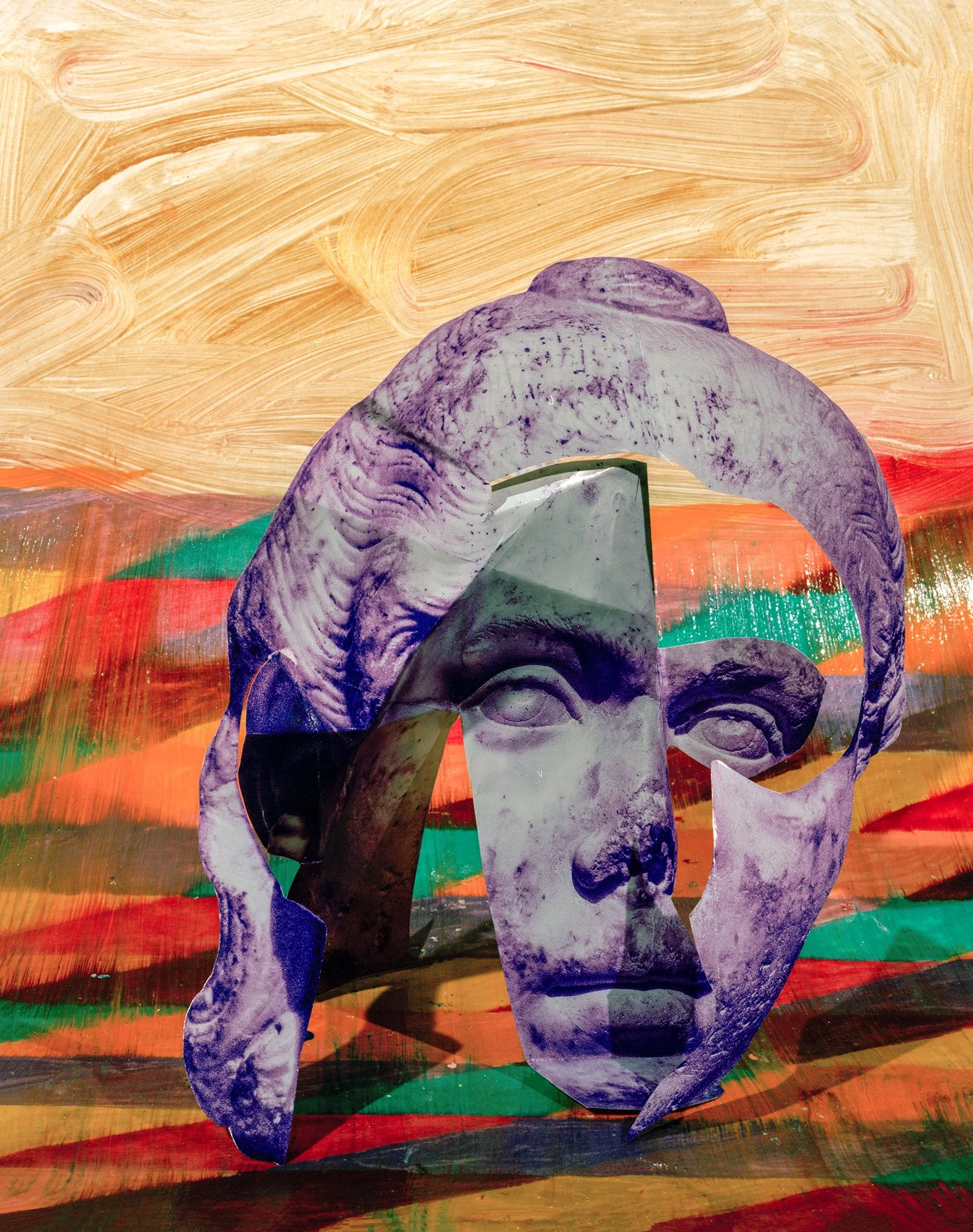


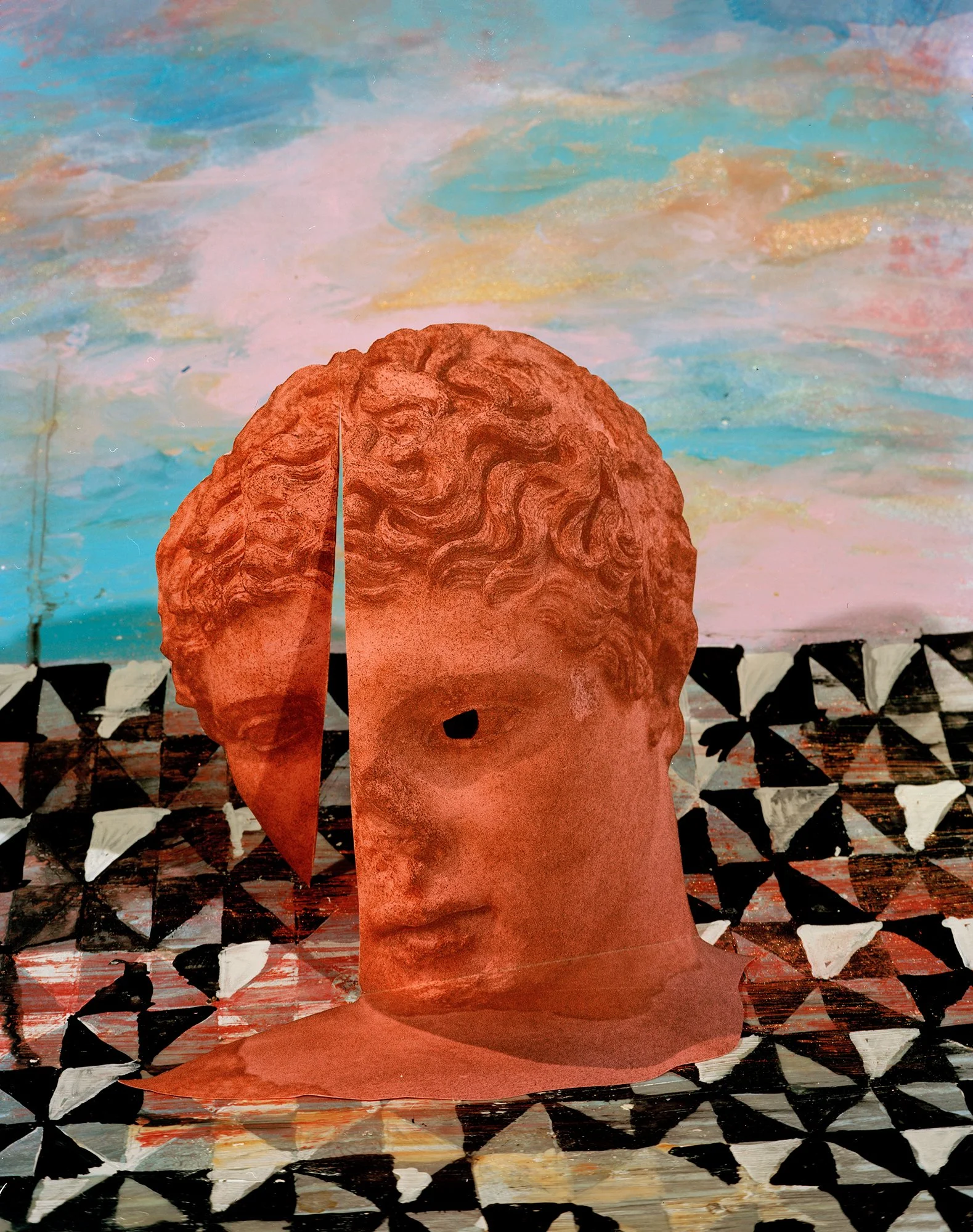


How to make my life experience as a gay immigrant as the flesh of my practice, not stories it tells? Partly by thinking of photography not as hunting but as construction, in a practice that is hybrid, non-hierarchical, and porous. Debris makes my photographs of ancient sculpture into paper sculptures (through cut and fold). Those heads are travelers - of time, of space – dis-located in museums, re-signified, but also fierce survivors, hybrids like the very flesh of this work.
1
The experience of being an immigrant, a foreigner, is that of belonging and not - a bit like remembering past lives. You are multiple. (Je est un autre, said Rimbaud.) And, in another layer, if one is queer, one exists in different dimensions, as one learns of the tunnels and attics of society. One is not taught to be gay by their own family, by school, the way one is taught how to be straight. We learn by becoming, by participating in different cultures at the same time.
My life experience and its political implications are the flesh of my practice, not stories it tells. A practice that is hybrid, non-hierarchical, expansive, and porous.
2
I think of photography not as an act of hunting and capture, but as an arena—a space for construction. My images do not emerge from a decisive moment; they crystallize slowly, built through painting, sculpture, theatricality, and photography. What appears before the lens is handmade, inviting the viewer to slow down and look closely—to see each brushstroke, each fabricated inch: tactile, deliberate, and materially present.
3
Debris investigates the translation of three-dimensional objects into the two-dimensional space of photography. This transformation occurs at least twice in the work: first, in my photographs of ancient sculptures; then, in images of paper sculptures constructed from printouts of those originals. These paper heads are constructed entirely through cutting and folding—without subtraction or glue—to allow them to physically stand on their own. A tension emerges between the representation of the volume of marble or clay and the flatness of the cutouts.
Those heads are travelers - of time, of space – dis-located in museums, re-signified, but also fierce survivors, hybrids like the very flesh of this work.